

November 20th, 2026
Listen to Episode on:


Watch the Unabridged Interview:
Order Books
Saying No, Selectively, to New
Newness is essential for the human experience and a healthy brain, but just like anything else, too much of a good thing can eventually deteriorate its benefits.
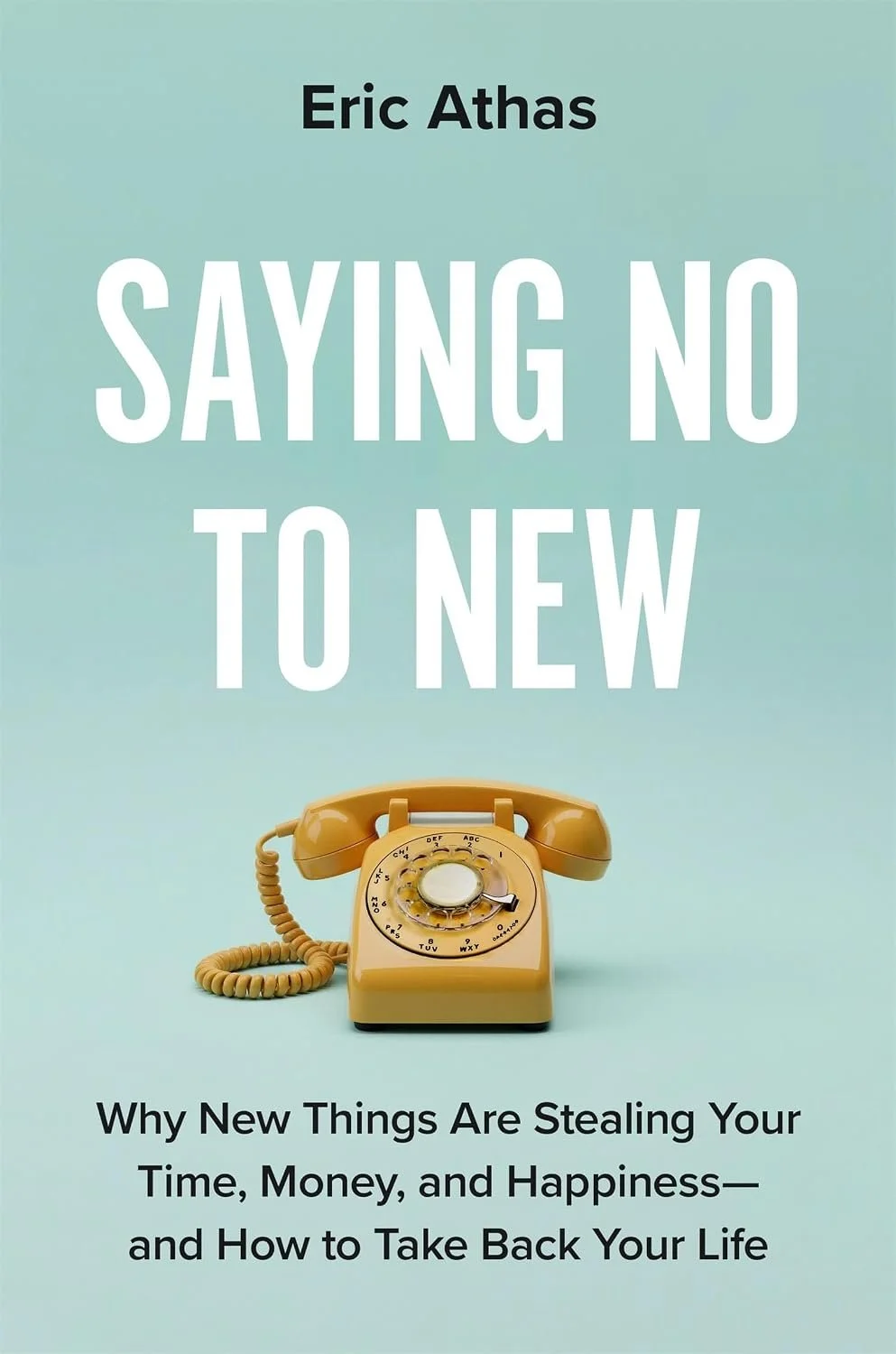
Eric Athas is an editor at The New York Times and author of the book, Saying No to New: Why New Things Are Stealing Your Time, Money, and Happiness―and How to Take Back Your Life, which helps readers understand their impulse to consume new things and how to reshape that relationship.
Eric and Greg discuss how, in a world obsessed with new, to have a healthy relationship with new things. The conversation delves into the functionality of novelty, why the drive for newness is innate to human nature, and some strategies to handle the onslaught of new things vying for our time and money.
unSILOed Podcast is produced by University FM.
Episode Quotes:
How consumer culture conditions us to chase the new.
[27:20] Everywhere we turn today, we're trained to believe that new is always better, and the new pair of sunglasses is better than the one that you had last summer, and the new phone is better than the previous version, and this season's new trend is certainly better than last season's new trend. And it's not to say that all new things are bad or that the problem is that new things are always problematic, but actually it's debunking the belief that all new things are better, and that's where it's this belief that everywhere we turn, new is better, new is better, and you should always be upgrading and always be getting the latest, the new thing. And when you stop and actually question that for a second, you start to realize, “Well, maybe sometimes new is better, and sometimes it's not,” and you have to figure out for yourself, well, which products are actually, actually useful and which ones actually match up with what you care about in your life.
Can too much newness be bad for us?
[09:35] Newness is actually essential for the human experience and for our brain health, and it can be a really good thing and a very useful thing. But if we're overloaded with new, like we are today, we can become distracted, [and] the benefits begin to deteriorate.
On how familiarity shapes our attraction to new things.
[10:42] Our brains are programmed to generally pay attention to new things and to ignore old things. But the new things that we encounter, the ones that we tend to like the most, and there's a psychology behind this, are the ones that are wrapped in the familiar. Once you, sort of, realize this, you can start to see it everywhere. Take movies, for instance. You look at the top 10 all-time box office hits; most of them are reboots or sequels. There's a reason for that. Because when you see Star Wars, these big box office hits that there have been sequel after sequel after sequel. Well, we're familiar with the brand, the story, the characters. And then when they come out with a reboot or a sequel, then they put a novel twist on those familiar storylines and settings and people. So, that's where newness and familiarity kind of work together.
Is America's preference for novelty a reflection of its culture?
[15:33] The preference for the new is a universal human feature. And certainly there are flavors of this in different cultures and different parts of the country. But I do think it resonates in a certain way with America and with the culture here.
Show Links:
Recommended Resources:
Guest Profile:
Guest Work:
If you enjoyed this show, here are some other unSILOed episodes you may like:
Episode 442: Enhancing Community and Connection with Rituals with Michael Norton
Episode 679: Happy Spending and Joyful Climate Action with Elizabeth Dunn